Maximum-control K-pop choreography — 13-tag DSL Seedance prompt
Polar opposite of @Ciri_ai's one-paragraph Seedance prompt. Same template family, different control strategy: instead of trusting Seedance to infer motion, lock every dimension (character/wardrobe/camera/music/timing/restrictions). Useful when you need exact reproducibility for ads or branded content. Source: EvoLinkAI/GPT-Image-2-Seedance2-Workflow Case 25.
The prompt chain
Copy these prompts, swap your character and topic.
Step 1GPT Image 2· tagged· 23 lines
[STYLE]
Monochrome grayscale illustration, 3D-rendered character, clean instructional reference sheet, white background, comic-style cell grid layout, technical diagram aesthetic.

[LAYOUT]
4×4 grid layout with a total of 16 panels. Each panel is separated by thin black border lines. Cells are numbered from 1 to 16, with consistent panel sizes.

[CHARACTER]
image1 (the same character appears consistently in all panels)

[PANEL STRUCTURE – per cell]
Top-left: bold number badge + English title text
Center: full-body character pose illustration
Bottom-left: English description text (3–4 lines)
Overlay: directional arrows indicating movement

[ARROWS / MOTION INDICATORS]
Curved arrows, straight arrows, and circular rotation indicators placed around the character to show motion flow and direction.

[RENDERING STYLE]
Highly detailed 3D sculpted style, soft studio lighting, subtle shadows, no color, grayscale shading, clean linework, game concept art quality.

[NEGATIVE]
No background scenery, no color tones, no additional characters, no complex background.
GPT Image 2 step generates the 4×4 grid of 16 dance steps; author re-used the canonical movement-sheet prompt skeleton (see technique step 1).
Step 2Seedance 2.0· tagged· 94 lines
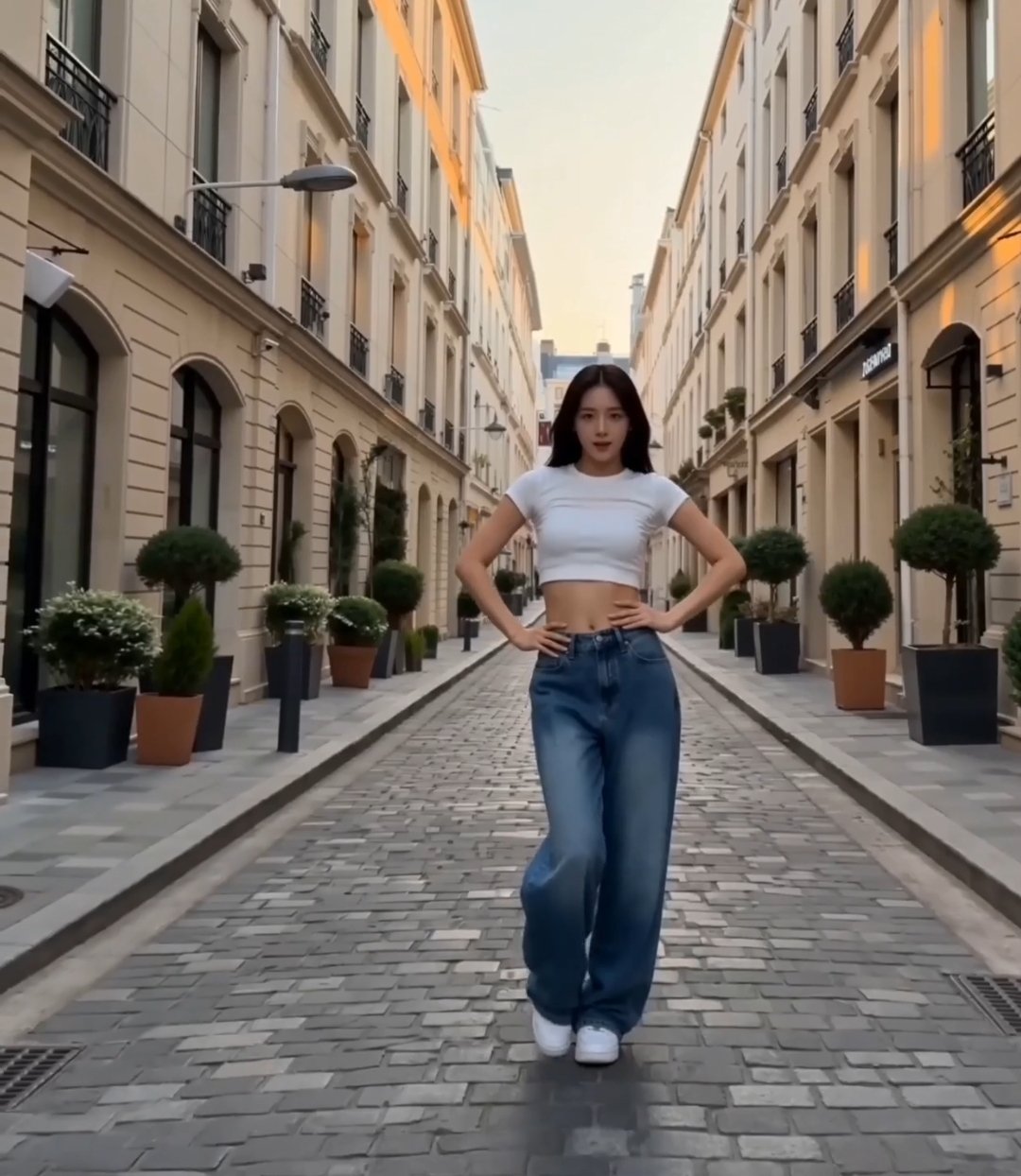
K-Pop Dance Sequence (16 Steps, Korean Street) [PROJECT TYPE] Cinematic K-pop dance video (instruction-to-performance translation) [CORE REQUIREMENT — STRICT] The video must faithfully follow the exact 16-step choreography shown in the reference sheet, in the same order, with accurate poses and transitions. No steps added, removed, or rearranged. 🧍♀️ [CHARACTER] Korean female dancer (K-pop idol aesthetic) Slim, athletic build Same consistent face and proportions throughout Expressive, confident stage presence Natural, fluid but sharp K-pop movement quality 👕 [WARDROBE — K-POP STYLE] Fitted crop top Loose high-waisted jeans Sneakers Modern idol styling (clean, trendy) Fabric reacts naturally to movement (denim weight, subtle folds) 📍 [LOCATION / ENVIRONMENT] Empty aesthetic Korean street (Seoul-inspired)
Verified — full prompt published verbatim by @Kashberg_0. Demonstrates the most maximal Seedance prompt shape we have observed: 13 bracketed sections covering character / wardrobe / location / 16-step sequence / camera / movement / timing / music / visual style / output / restrictions. Counterexample to the @Iancu_ai 'short wins' rule — this case uses an exhaustive prompt and gets exactly the controlled output the author wanted. The trade-off: short prompt = let model improvise; long prompt = lock in every parameter.
Your turn
Upload your character and run this pipeline.
The prompts above are pre-filled in the workbench. Swap in your image and tweak the topic — first generation is free.
Try this technique →